
Weird Duck Time
The first lifer of 2026
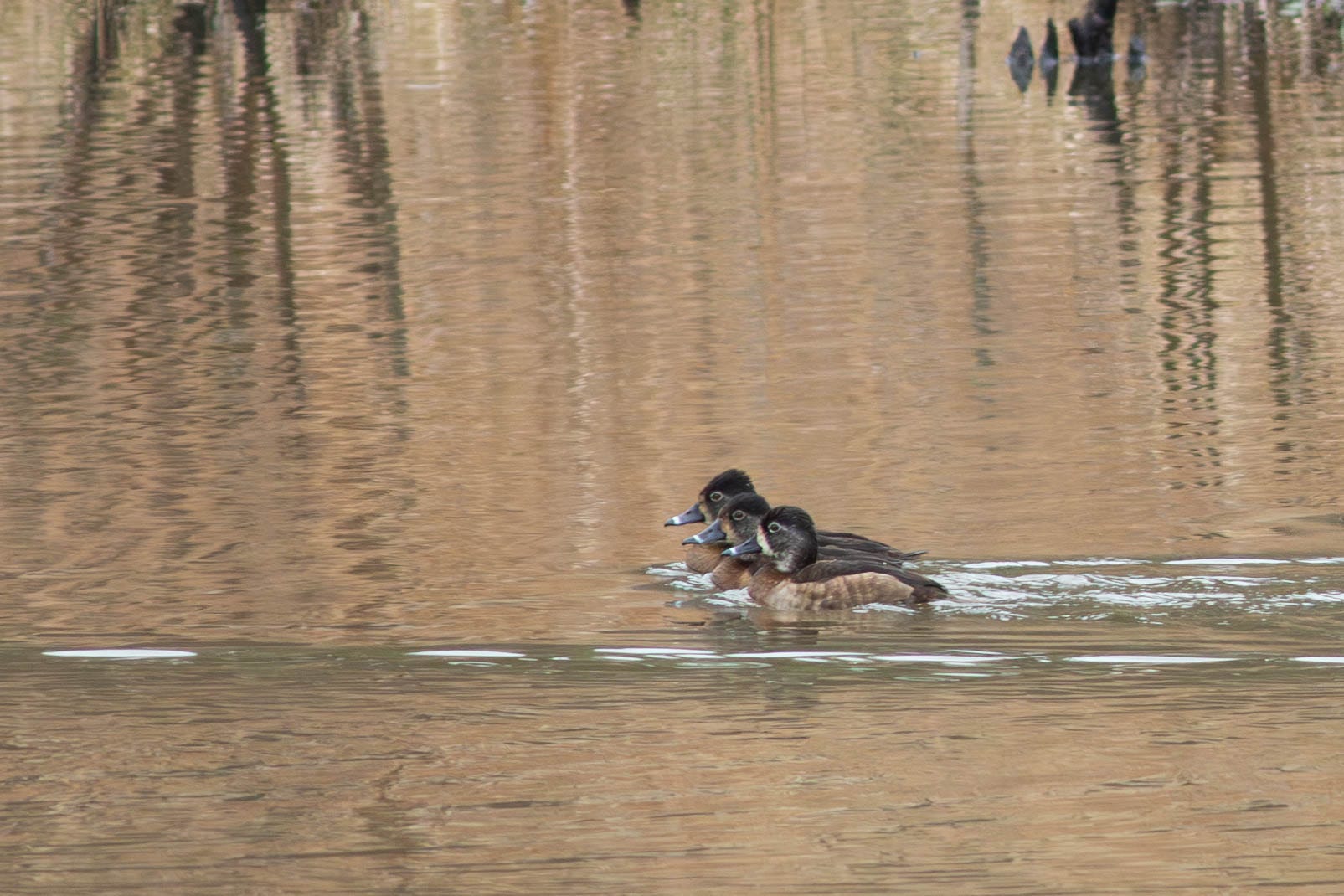
On a cold, gray, January Saturday in 2021, with most of the afternoon behind me, I lamented having spent the time indoors. “You could go to Peachtree City,” a friend suggested. “Common goldeneyes have been spotted at Rockspray Pond.”
Sure, whatever, why not drive to a suburban neighborhood to stand on a stubby, frost-crunchy lawn to look for ducks? I thought.
At that time, I claimed to not care about ducks. Or geese. Or shorebirds. In reality, less than a year after I’d started birding, the vast number of new-to-me species and the often minor differences between them (at least to my inexperienced eyes) overwhelmed me. Because learning these species groups seemed intimidating, insurmountable, I convinced myself that I did not care.
But I wanted to get out of the house, and going to Rockspray Pond seemed a near-guaranteed way to add to my eBird and iNaturalist life lists.
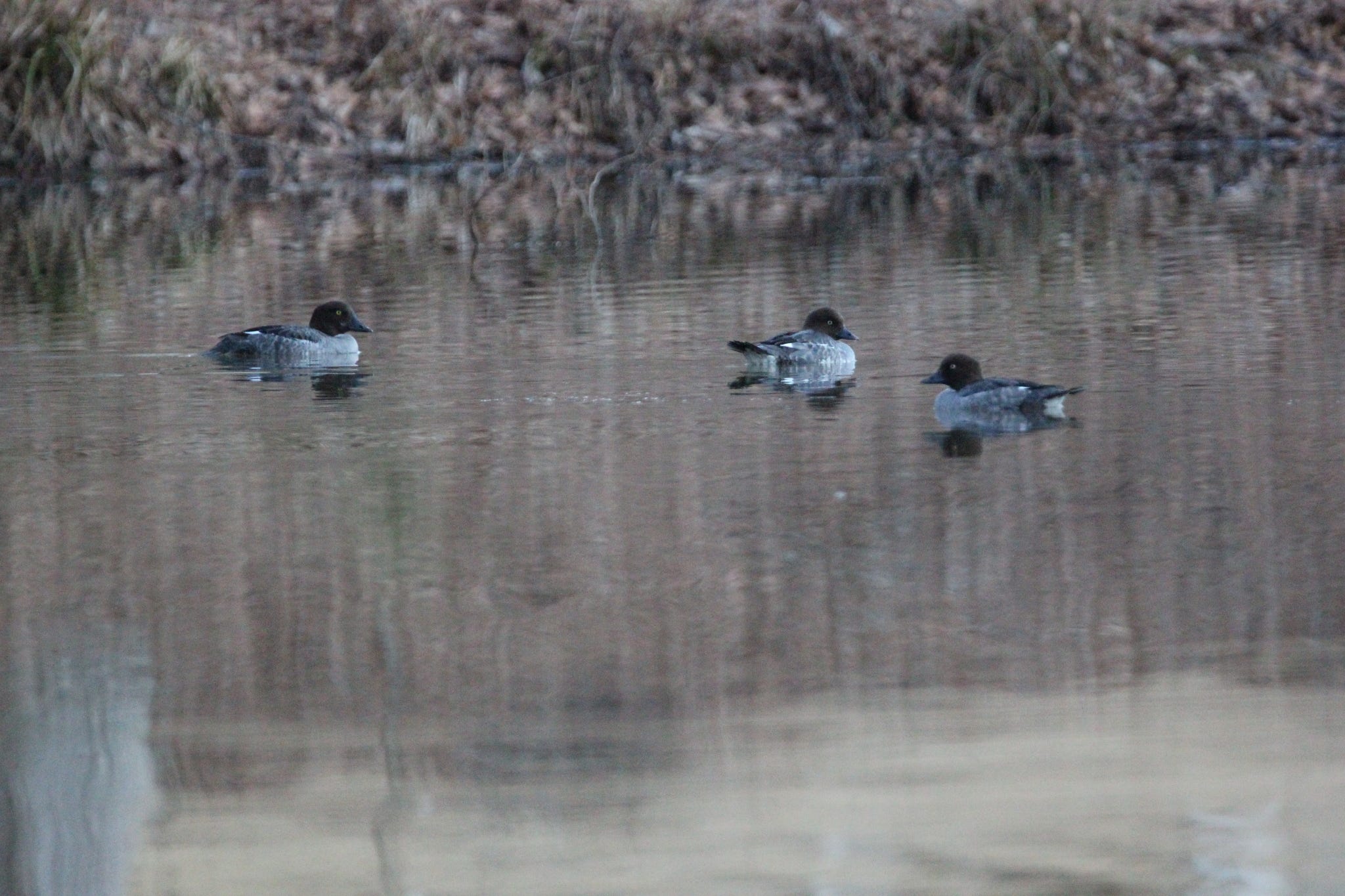
I expected to get out of my car, snap some photos, and that would be it. Instead, I stood by the pond for over an hour, watching the goldeneyes circle the pond, disappear into a forested cove, then reemerge to float to the middle of the pond again. I stayed after the sun had long set, with evening shadows dropping further and further down on the park, as the dark silhouettes of three goldeneye hens faded into the black trees behind them, and the pond that had been a shimmering disc of silver and gold — reflecting dried leaves and cloudy sky — had dissolved into the darkness, too. When the only light was a thin sliver of moon, I finally walked back to my car.
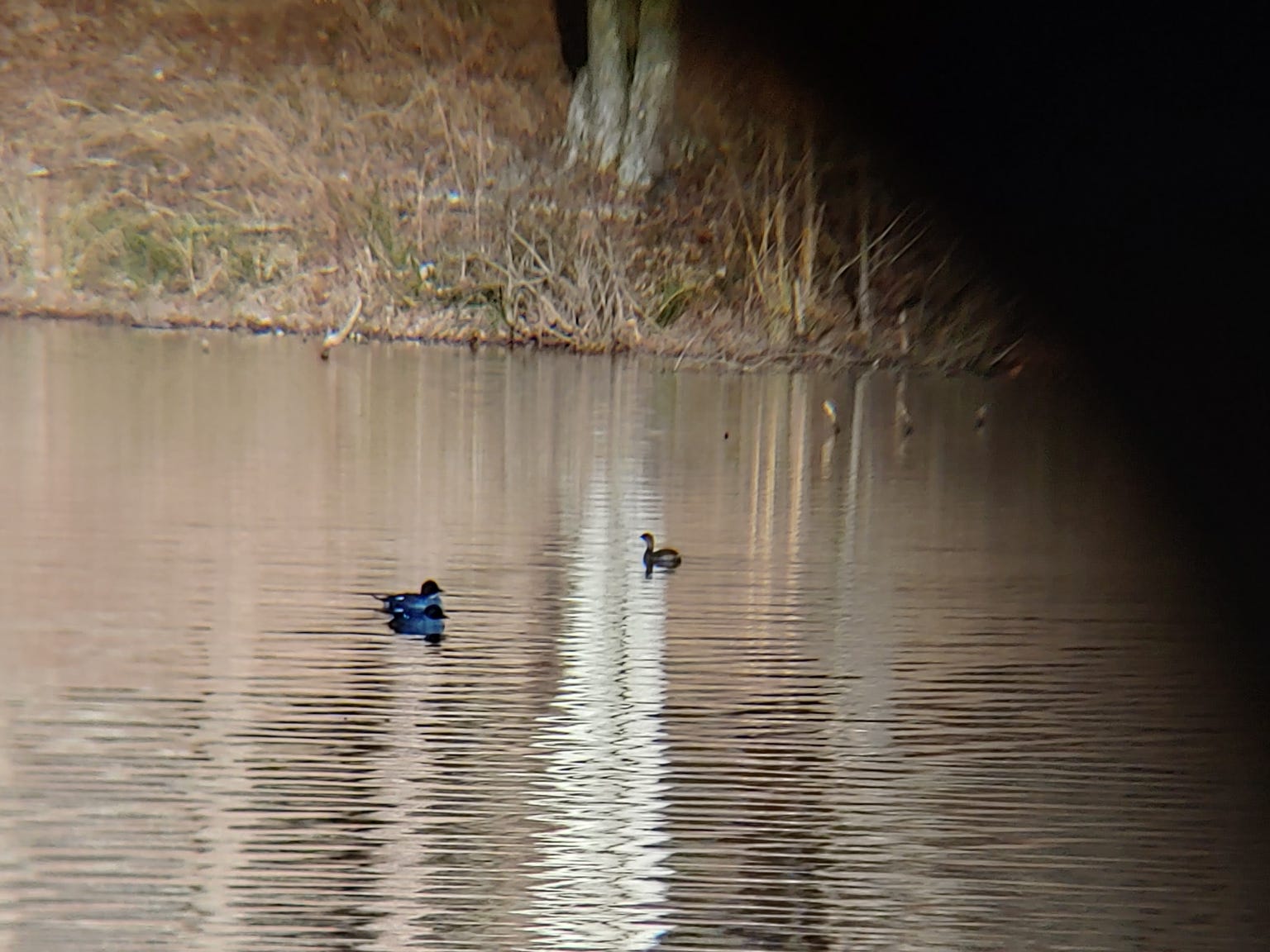
Radiating awe and delight, I scrolled through my phone before even starting the car, admiring blurry digibin pictures of the common goldeneyes. I’d found them! The rare ducks! For the first time, I understood the allure of ducks! I do not have a single spark bird, but those common goldeneyes were my spark ducks.
Until that winter, I thought most ducks in the Atlanta area were this:
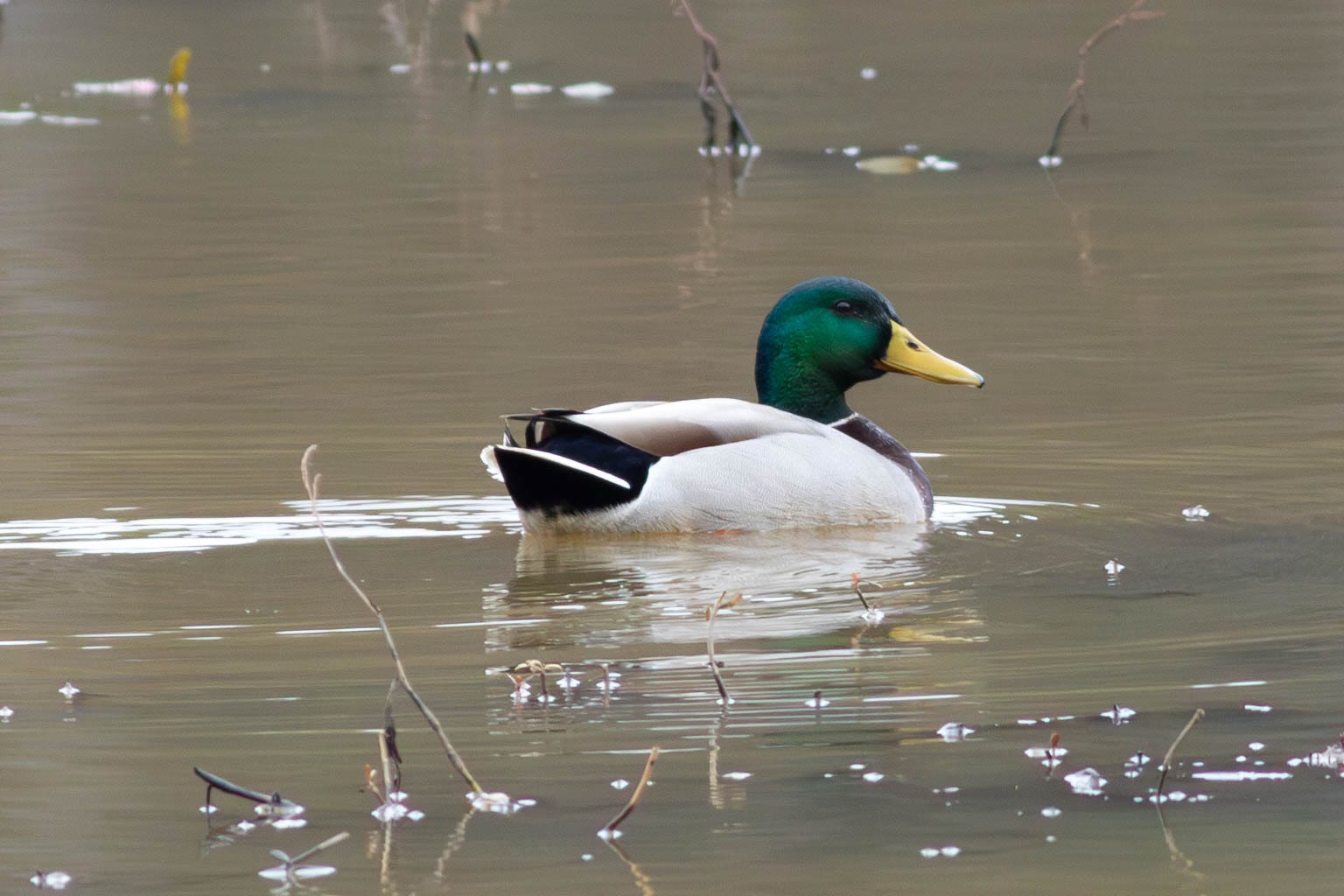
The common mallard is the Northern cardinal of ducks — striking birds overlooked as boring because they are common. Just as we take for granted the scarlet plumage of male cardinals, who we can see at any backyard feeder, I think if mallards weren’t found in practically every city park, we’d attach flowery language to the emerald-crowned males. Even as in the photo above, when a dreary day has darkened his feathers to the color of an evergreen forest, they still shimmer. The January clouds couldn’t fully douse his glitter.
I imagine my pre-2021 self was not alone in being unaware of just how many ducks winter in our region. In metro Atlanta alone, a “duck” could be mallard, wood, Muscovy, ring-necked, long-tailed, American black, ruddy, redhead, bufflehead, merganser, scaup, shoveler, gadwall, teal, canvasback, wigeon, and probably something else I’ve left out. That’s excluding geese, loons, coots, and other non-duck winter waterfowl of the Southeast.
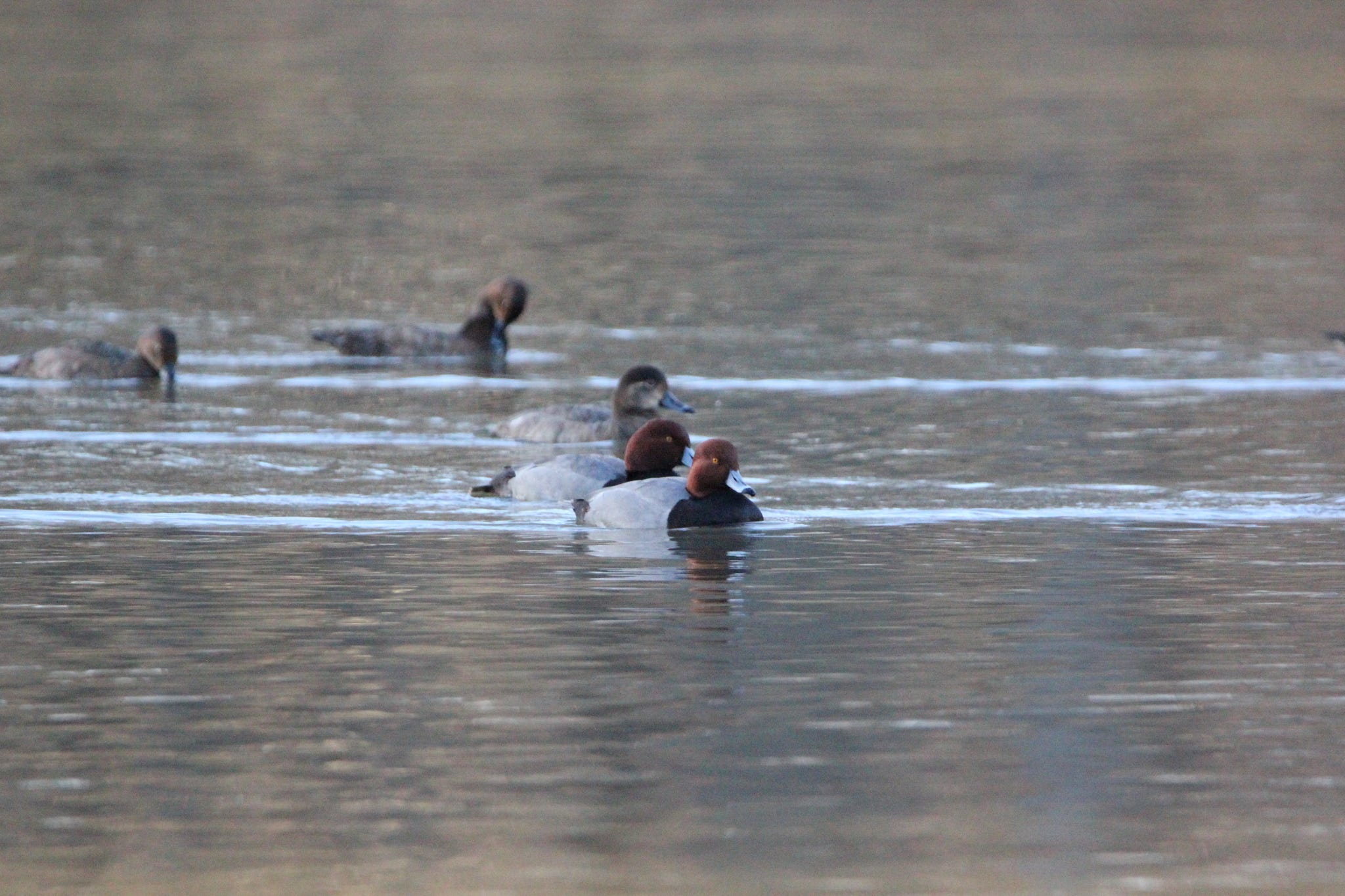
A couple of weeks after the goldeneye sighting, I drove back down to Peachtree City, this time to Huddleston Pond, adding to my life list a duck I’d surely seen before I was a birder and a duck I’d only just learned existed — bufflehead and redhead. Again I stayed out past sunset.
I was hooked. That winter, I began to seek out all the ducks, taking blurry digibin and then noisy, less blurry DSLR photos of every species I could find.
Five years later, I have learned — and then forgotten — many species of Southeastern winter waterfowl. Reviewing my photos on iNaturalist, I find that I stopped documenting most of them in 2023 or even 2022. What happened!? In that absence, I’ve also let my identification skills atrophy.
In 2026, I’ve pledged to relearn my winter ducks, not only rebuilding a list of species and skills, but also spending time with them. I’ve made a goal to take a nice photo of as many species as I can, not simply to have nice photos, but to slow down and spend time with individuals rather than snapping a blurry-but-IDable photo as proof for my eBird or iNaturalist list.
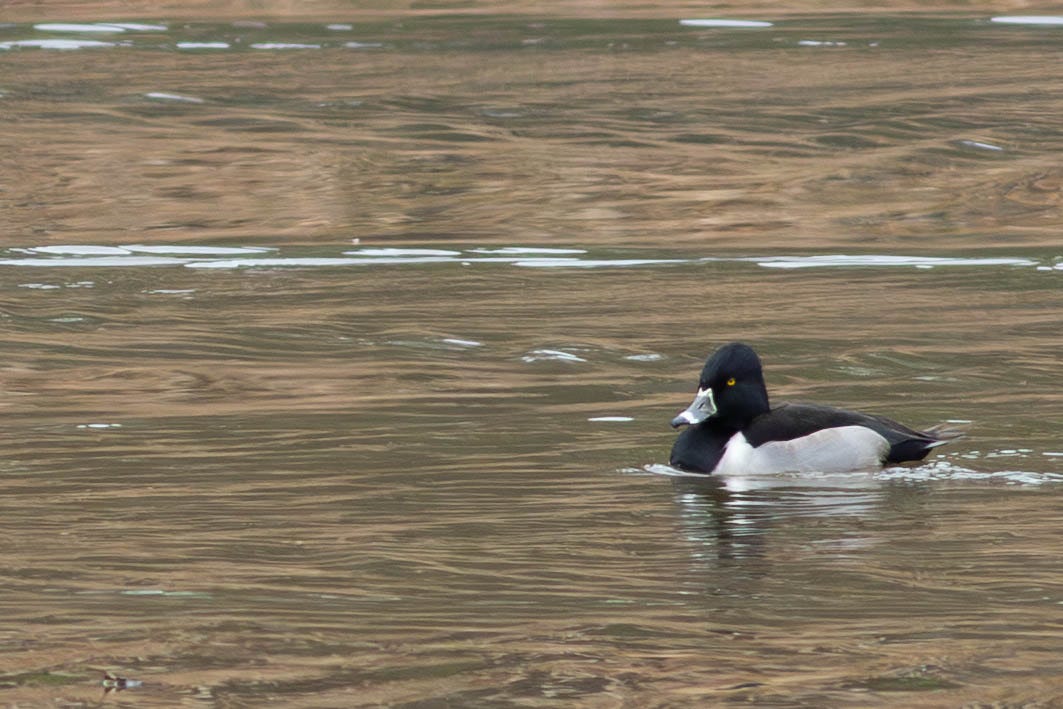
I’m not not going to chase a potential lifer, though.
This January brought me to Sams Lake in Fayetteville, on another dreary afternoon, seeking a lifer duck. I followed a path between tall trees and climbed the steps of an overlook at the lake’s edge. Before me stretched a sepia scene — beige clumps of various grasses and rushes on the shores, some standing tall and upright with others collapsed and tangled at their bases. Light gray and brown, dried perennial stems mingled with these other ghosts of summer’s greenery. A pale, leafless sycamore towered near me. I’d passed leafless oaks along the trail. Rows of loblolly pines stood sentry beyond the opposite shore, their tall trunks an umber wall between the park and nearby houses.
Pale gray clouds knit a solid blanket over the sky, lacing traces of silver through the surface of Sams Lake that was otherwise bronze in its reflection of the desiccated vegetation. Brown-bodied Canada geese gathered in various groups around the lake. High-pitched shrieks were all that revealed the presence of killdeer, the small birds hidden by the mud and rushes on the bank they scurried across.
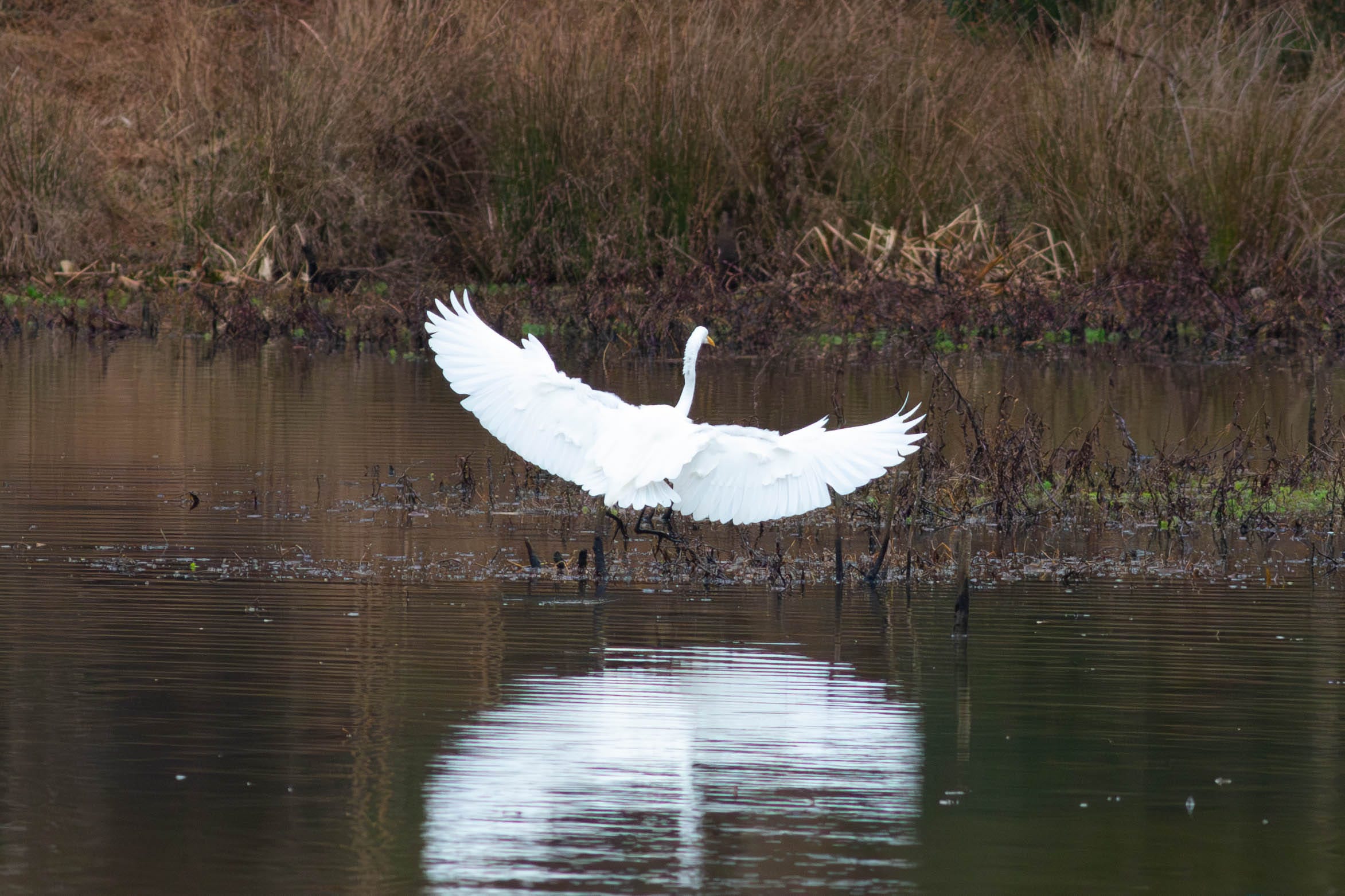
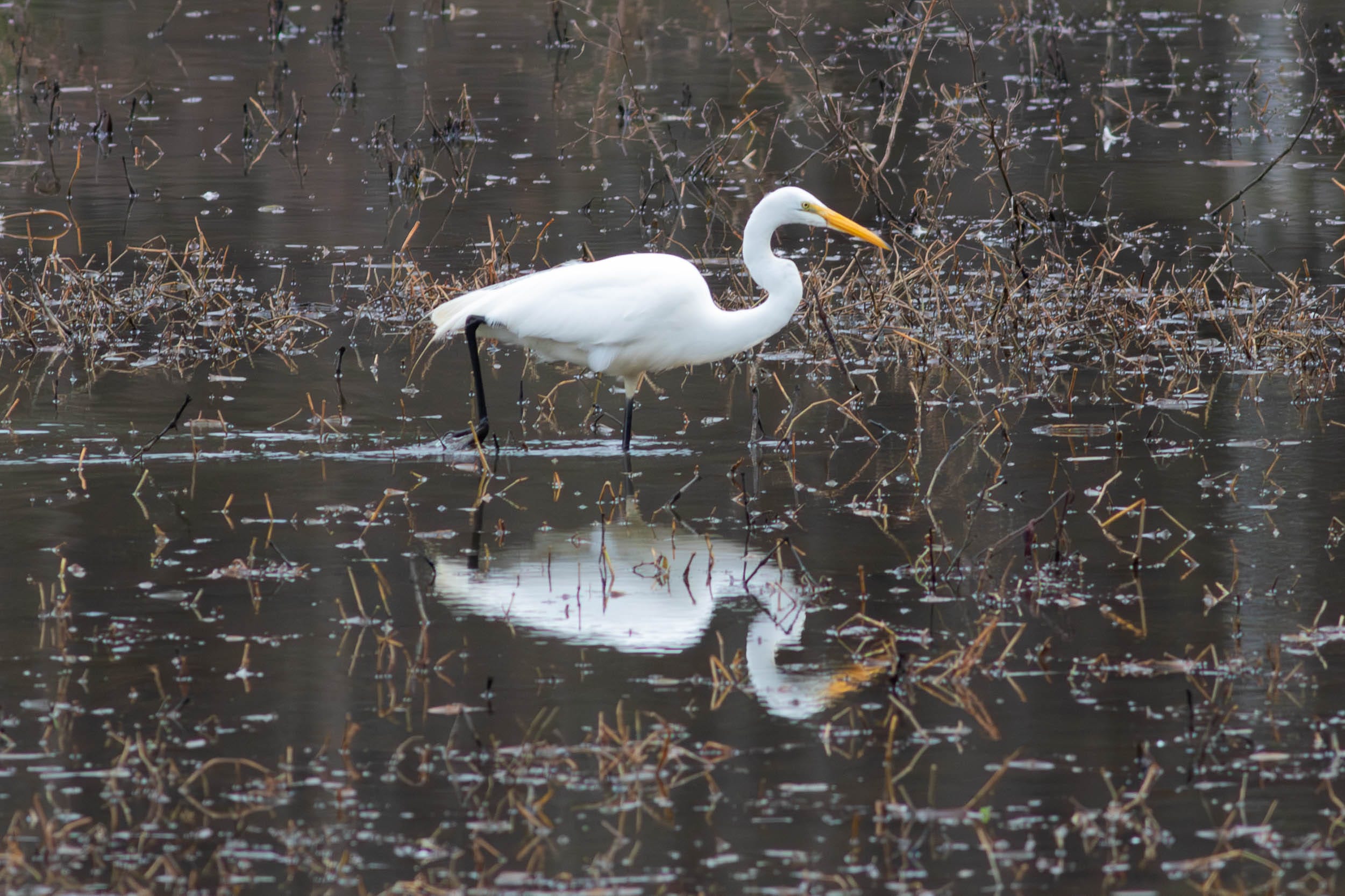
As I scanned the beige shores for groups of beige ducks, white soared into view. Like a cloud coming not just from the sky above but from the summer past, a white cloud that hadn’t been grayed by winter’s shadows, a great egret swept onto the lake’s surface. I continued to scan the shores.
This time, the search was a true challenge — American black duck, who both resembles and mingles with female mallards.
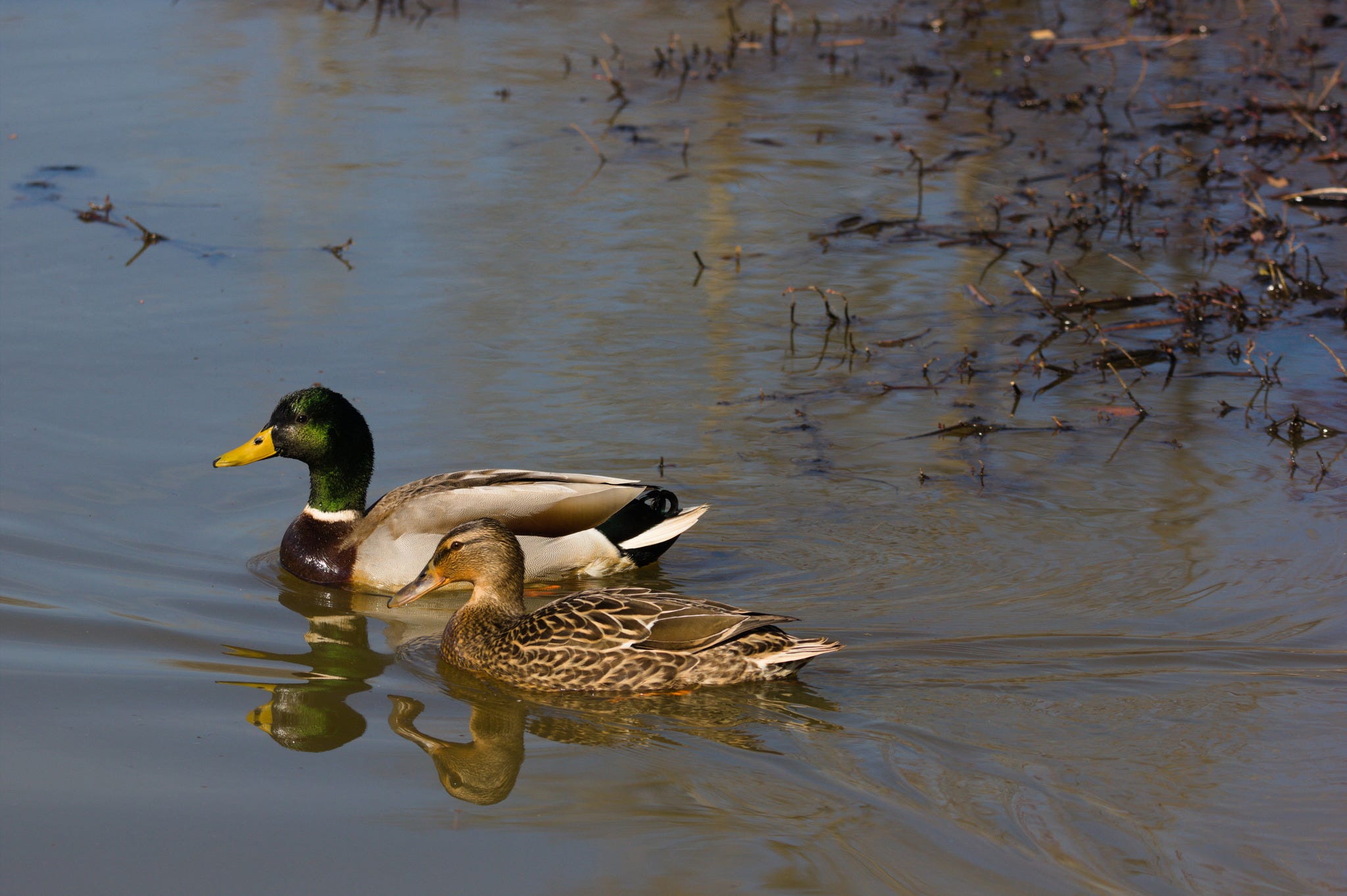
Unlike their showy emerald-headed partners, female mallards are nondescript, a mix of browns and beiges like the Atlanta winter itself. Even their orange bills are a muted shade, like the leaves that hang from winter beech trees. The only color they share with their flashy male counterparts is a wing patch of violet-blue iridescence called a speculum. On mallards, the speculum is bordered with white.
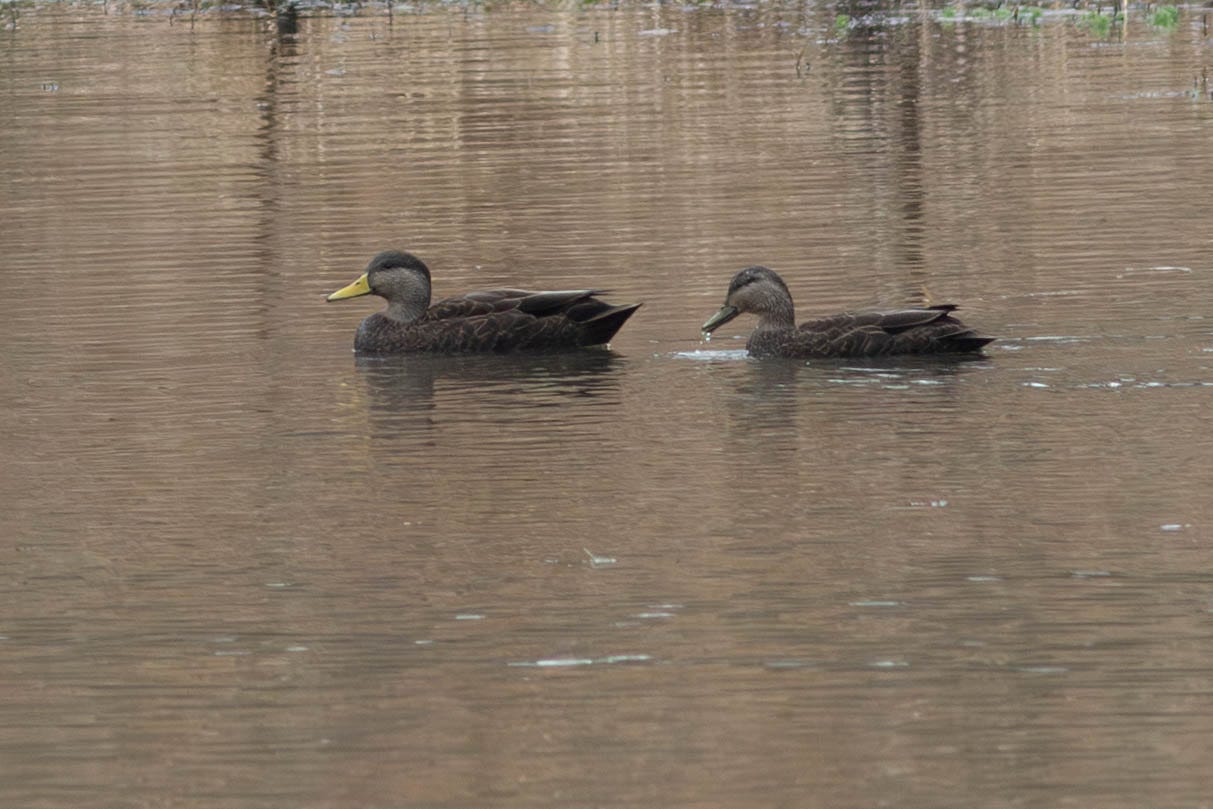
Compared with American black ducks, female mallards are flashy. Their varied beige and brown patterns are distinct, almost like a mosaic, whereas the American black duck’s plumage is a muted muddy brown, not quite solid, but with colors fading and running together, like a watery wash of earth-colored paint. Female and males look very similar, the same soft brown with a blue-violet speculum that lacks the white border of the mallard’s. Males have yellow bills, and females’ bills are dark olive-brown, not much different from their plumage. In flight, or as in the photo below, when a male is flapping his wings to shake off water, one can see another difference between the two; the underside of males’ wings are white.
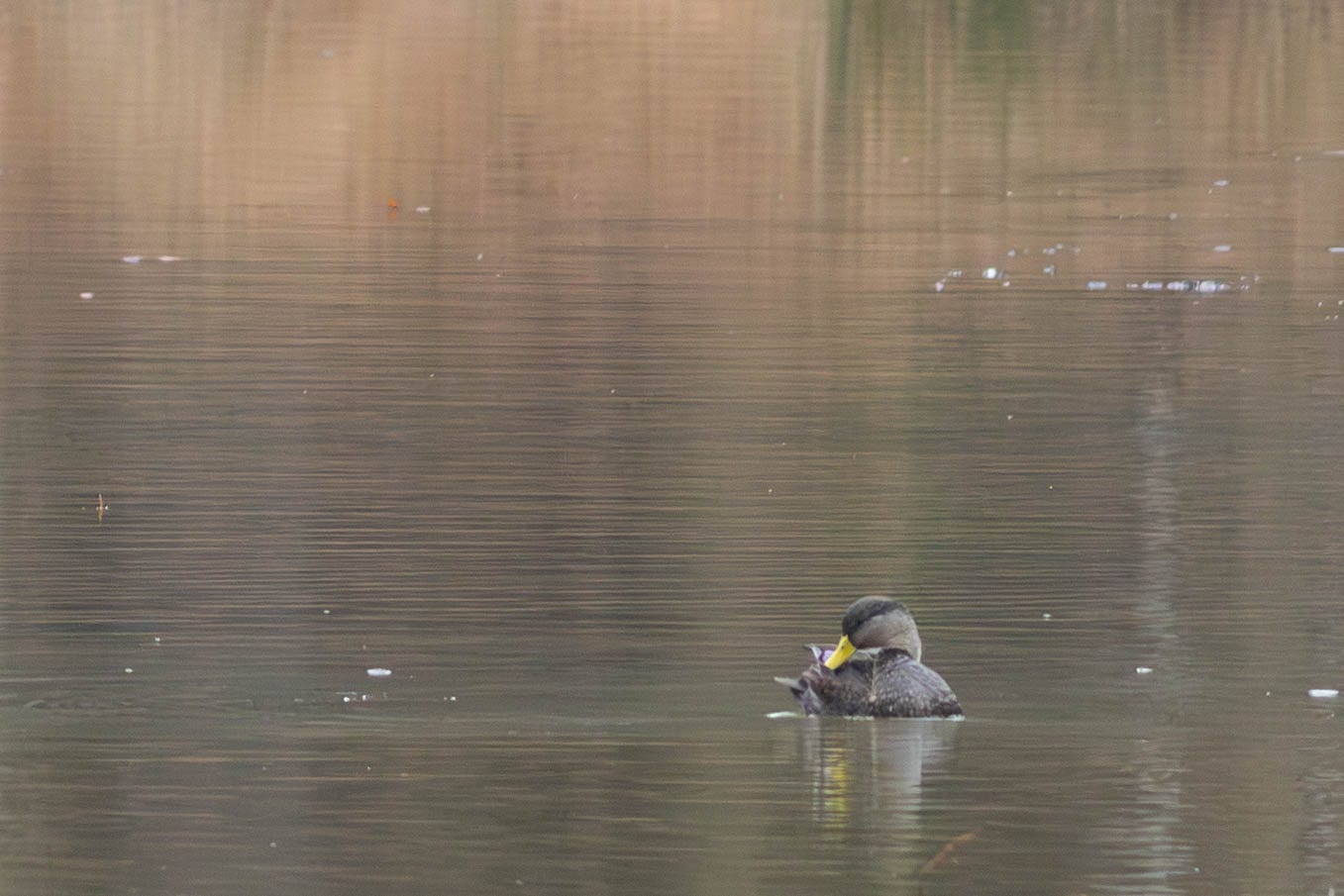
In 2021, the American black duck was a lifer I probably wouldn’t have attempted to seek. While the differences are clear in these photos, in the field, distinguishing the two species of ducks is a challenge. They mingle, floating on the water and foraging on the shore in a mixed-species group. In winter’s low light, everything that isn’t a male mallard can look like a vague mix of brown. Shadow and distance dull the yellows and oranges of bills to “is that brown or dark yellow? Is that a brown bill or an orange bill with mud on it?”
But as I watched the shores of Sams Lake, a group of brown, beige, and dull bronze birds floated from a distant shore towards the muddy bank. From the mallards and ring-necked ducks, a pair broke off to float their own way. I spotted the male’s yellow bill. There he was! My lifer American black duck! With him was a dark-billed female, perhaps his mate. Like many ducks, American black ducks seek out their partners in fall and winter and migrate together in the spring.
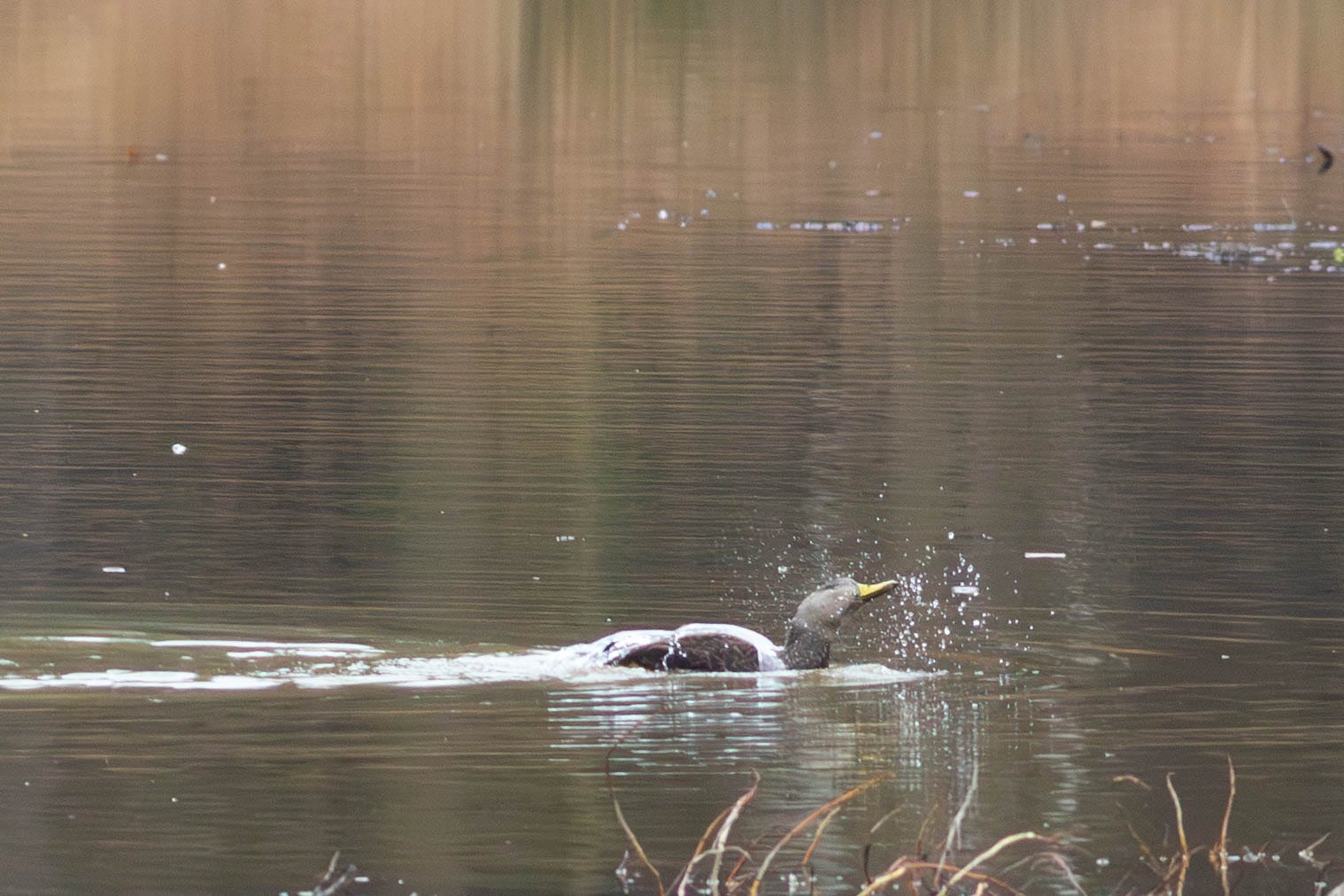
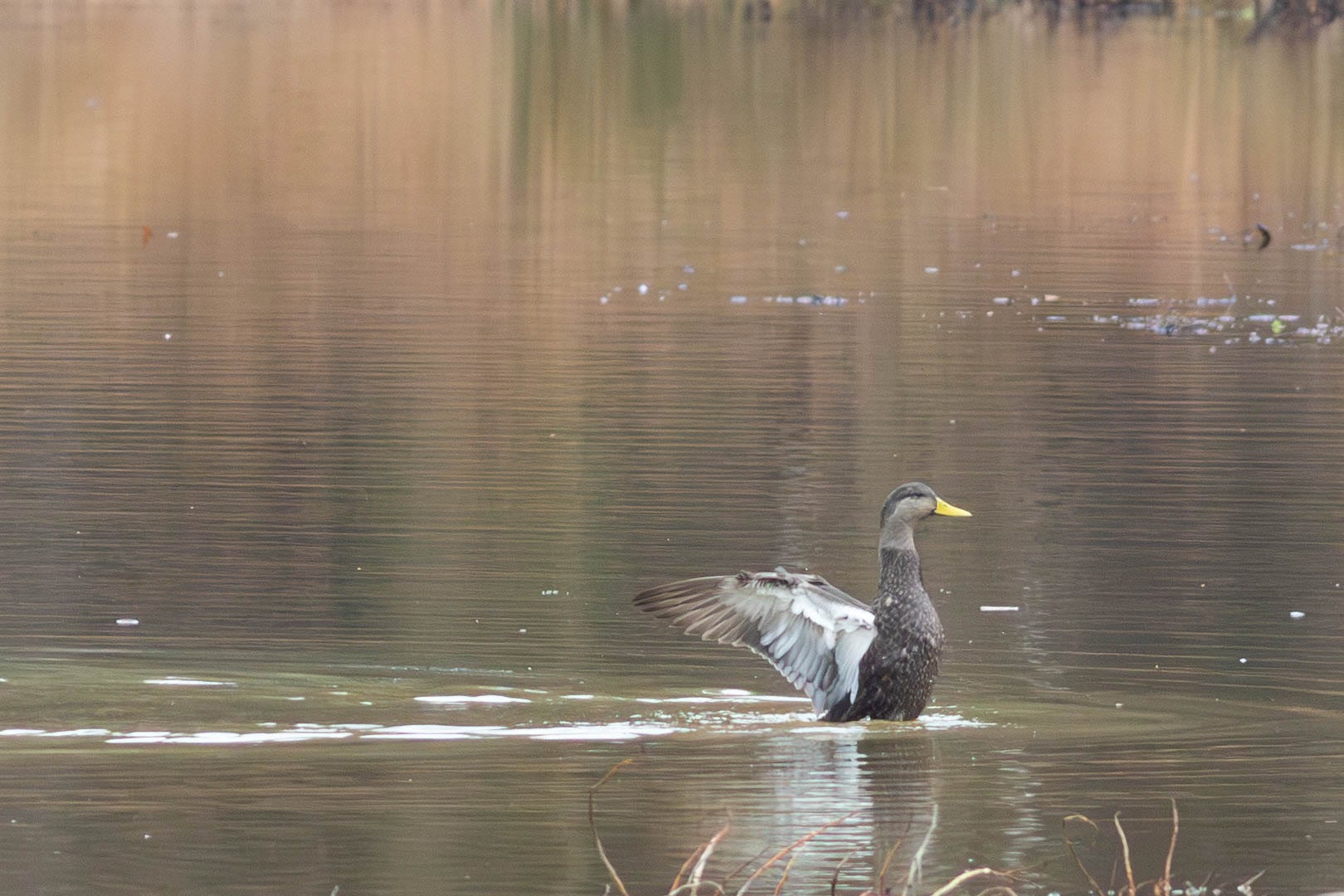
At some point, the male separated from the female. She disappeared from my view, blending in with the reedy shore. The male floated towards the middle of the lake. He dove beneath its surface, revealing his speculum.
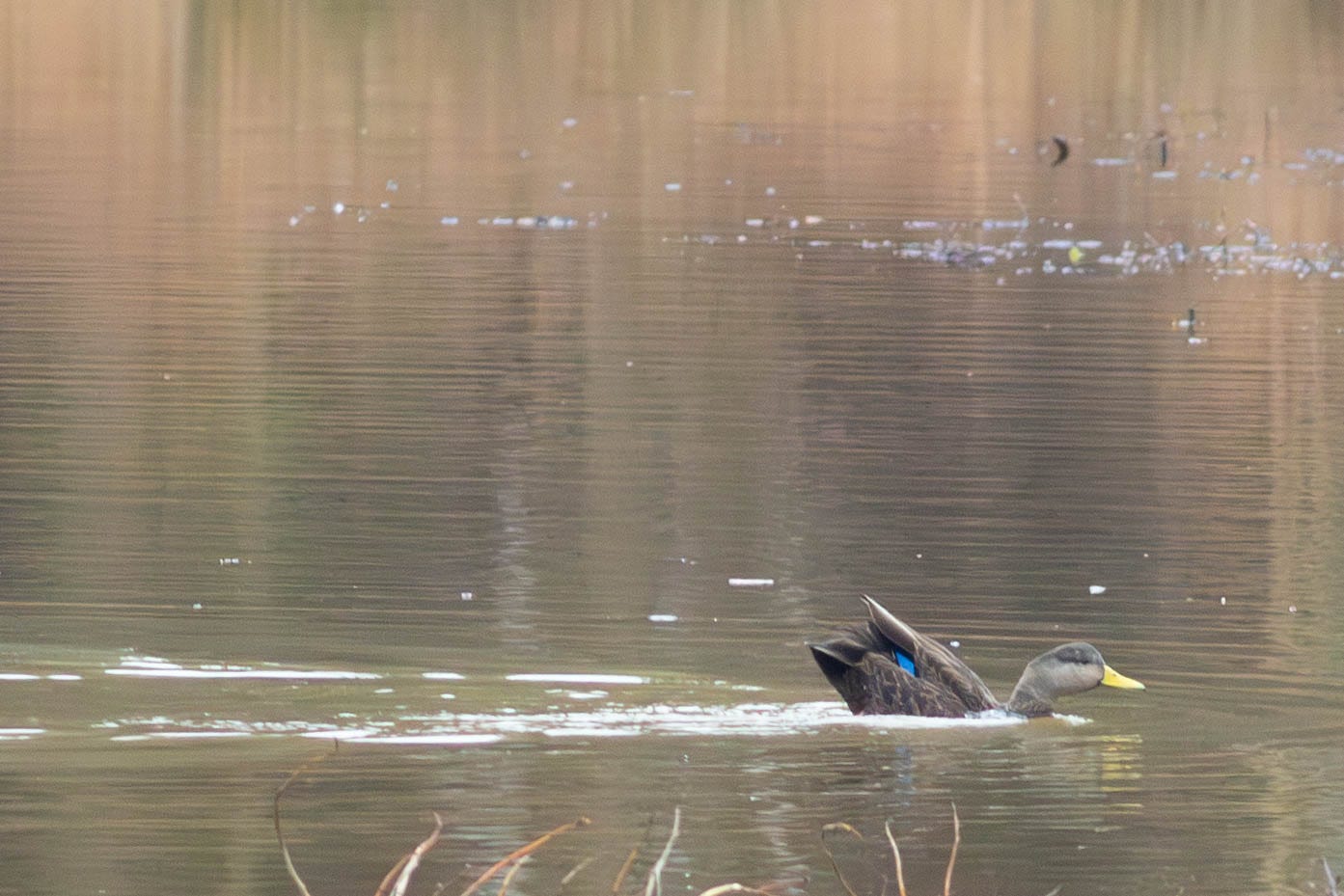
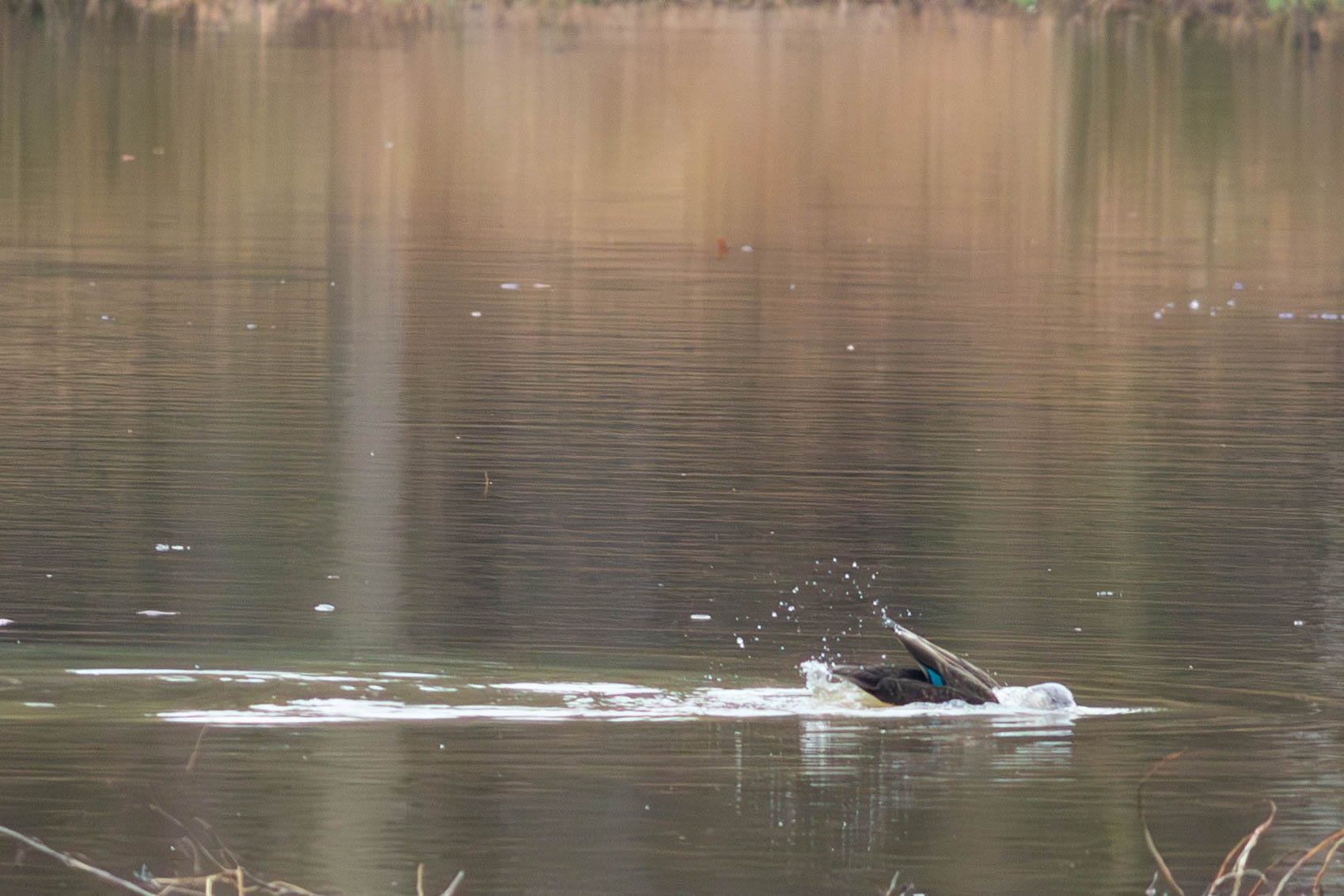
Against his dark, understated plumage, without the interruption of a white border, the patch of vivid, shimmering blue was all the more striking — a brief flash that brought to mind the saturated blue of summer skies, of Virginia bluebells blooming in the springtime forest, of indigo buntings singing in summer meadows.
Weird Duck Time is a term coined by nature writer and cartoonist Rosemary Mosco in The Four Seasons of Bird Watching. I have been erroneously calling it “Weird Duck Season” in previous posts.
Upcoming Events and Community Science
This Wednesday, January 21st, is Squirrel Appreciation Day! Find squirrel-related community science projects here.
The Great Backyard Bird Count will be on February 13-16 this year!
Georgia Botanical Society has several free field trips coming up, including a winter lichen hike at F. D. Roosevelt State Park on February 7th and multiple trout lily walks on February 28th and March 1st — one at Chattahoochee National Recreation Area and two at Stone Mountain.
Both Georgia Botanical Society and Birds Georgia celebrate their centennials in 2026!
Have you seen any monarch butterflies? MOVERS (Monarchs Overwintering in Southeastern States) is collecting this data! Find more information here or here, and at their iNaturalist project.
Find community science events at the SciStarter calendar. To suggest an event or initiative for me to include in future posts — wherever you are, not limited to the Southeastern US — reply to this post in your inbox, send me a Substack message, or
I do not know my different ducks at all, but I love them. Thanks for this exciting duck post! Congratulations on your lifer.
Wow! I had no idea we had so many species of ducks. I rarely see ducks on the water. If I’m lucky, when I kayak or visit the swamp in the spring, I may see a mama duck with babies trailing behind but most of the time I see them fly up from the swamp when I startle them. Usually when the river rises in winter my swamp fills and becomes a duck refuge. They nest in the hollow trees. We lost many of those trees during Helene though.
I like raising ducks on the farm, mostly khaki Campbells. They give some of the most delicious eggs that are great for baking. 1 duck egg=2 chicken eggs in recipes. Also, in the winter when there is less daylight, the chickens slow down laying but ducks never do.